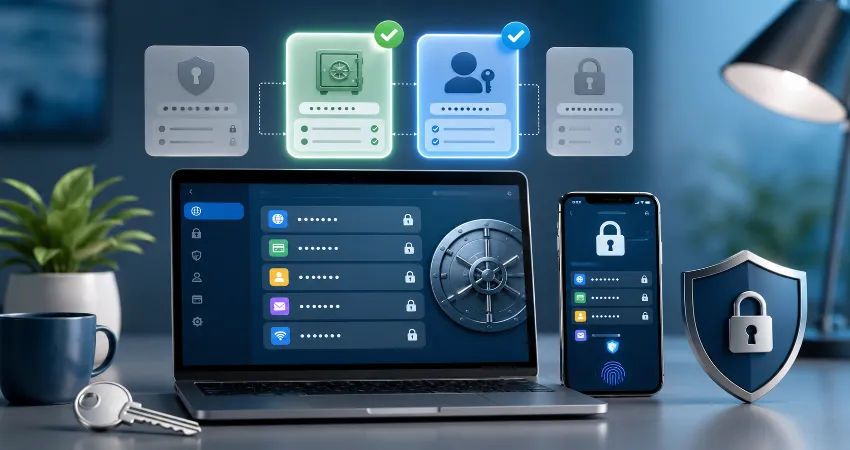
A password manager used to be easy to judge: could it save passwords, generate strong ones, and fill them automatically? In 2026, that standard is too low. Free tools now handle those basics well. The better question is whether a paid service removes enough friction from your digital life to justify a recurring fee.
That changes how I evaluate the category. Paying makes sense when a service improves recovery, family sharing, cross-platform access, passkey handling, security auditing, or long-term account continuity. Paying simply to store passwords is harder to justify. The smartest choice starts with your workflow, not the longest feature list.
What Makes a Password Manager Worth Paying For?
A paid password manager should solve a problem your free option cannot solve well enough. Useful upgrades include secure family sharing, emergency access, an integrated authenticator, encrypted file storage, detailed vault health reports, better account organization, and consistent autofill across different operating systems.
Portability matters too. A password manager becomes part of daily life. If it works perfectly on one device but poorly on another, users may eventually fall back to password reuse or manual copying. Cross-platform consistency is therefore part of security, not merely convenience.
1Password: Best for a Polished Household Experience
1Password is easiest to justify for people using several devices or managing credentials for a household. Its value comes from the combination of polished autofill, multiple vaults, family sharing, Watchtower security alerts, passkey support, and strong account organization.
Travel Mode is also distinctive. It can temporarily remove vaults not marked safe for travel from your devices. That may matter to frequent travelers or people carrying sensitive work information. For someone who only needs basic password storage, however, 1Password can be more than necessary.
Bitwarden Premium: Best Value Upgrade
Bitwarden shows why you should not automatically pay. Its free plan already supports unlimited password and passkey management across unlimited devices. For many individuals, that is enough.
Premium becomes worthwhile when you specifically want features such as an integrated authenticator, emergency access, encrypted file attachments, security reports, or extra account protections. Its annual cost is also relatively low. A practical approach is to start free and upgrade only when you can name the premium feature you actually need.
Proton Pass: Best for Privacy-Focused Users
Proton Pass has grown beyond a basic password vault. Its free plan includes unlimited logins, unlimited devices, passkey support, and a limited number of hide-my-email aliases.
Paid plans make more sense for people who actively use aliases, want an integrated two-factor authenticator, need more vault flexibility, or already use other Proton services. The interesting idea here is that password management and identity privacy are treated as connected problems. If you rarely use aliases, the free version may already be sufficient.
Keeper: Best When Emergency Access Matters
Keeper is worth considering when your priorities include digital continuity. Its consumer plans combine password and passkey storage, syncing, secure sharing, two-factor authentication, and emergency access.
Emergency access matters for families, caregivers, and people planning how important accounts should be handled if they become unavailable. A trusted person can be designated to request vault access after a waiting period. If you only want faster logins, cheaper options may be enough. Keeper becomes more compelling when recovery planning is part of the requirement.
Dashlane and NordPass: Good, but Not Automatic Upgrades
Dashlane and NordPass are capable services. Dashlane offers cross-platform access, passkey management, password health features, secure sharing, and broader protection tools. NordPass includes passkeys, Password Health, breach monitoring, secure sharing, email masking, and wide device support.
The issue is not whether they are good products. It is whether you need their paid extras. If your needs stop at generating, syncing, and filling credentials, strong free options may cover them. These subscriptions make more sense when their monitoring, sharing, privacy, or bundled features are tools you will use regularly.
When Apple Passwords or Google Password Manager Is Enough?
Apple Passwords is a strong free option for people who mainly use Apple devices. It can manage passwords and passkeys, verification codes, security recommendations, and shared groups. For an Apple-centered household, that can eliminate the need for another subscription.
Google Password Manager is similarly practical for users centered on Chrome and Android. It stores passwords and passkeys in a Google Account and makes them available across supported devices.
A dedicated manager becomes more attractive when you need richer vault organization, advanced sharing, emergency workflows, encrypted attachments, or easier movement between different platforms.
A Simple Rule Before You Pay
Write down three things your current password manager does not do well. If a paid service clearly fixes at least two of them, the subscription may be worthwhile. If your reasons are only “more features” or “better security,” you probably have not identified a real need.
Useful paid features include cross-platform autofill, secure family sharing, emergency access, integrated authentication codes, encrypted documents, security reports, and privacy aliases. Choose the features that change your behavior, not the ones that look impressive on a comparison page.
Questions And Answers
1. Is paying for a password manager safer than using a free one?
Not automatically. Reputable free managers can use strong encryption, support passkeys, and sync across devices. Paid plans usually add recovery, sharing, monitoring, storage, or administrative features. Security depends more on the service design and how you use it than on whether you pay.
2. Which password manager offers the best value for one person?
Bitwarden is difficult to ignore because its free plan is highly capable and Premium adds useful tools at a relatively low annual cost. Proton Pass is also attractive when email aliases and privacy tools matter. The best choice depends on which extra features you will genuinely use.
3. Is 1Password worth paying for?
It can be, especially for mixed-device users, families, and frequent travelers. Multiple vaults, Watchtower alerts, passkey support, family controls, and Travel Mode create a polished experience. Someone with basic needs may be equally well served by a free option.
4. Should I keep two-factor authentication codes in my password manager?
It is convenient and can make stronger account protection easier to maintain. Some users prefer a separate authenticator or hardware key so one vault does not contain everything. For critical accounts, keeping an independent recovery method is sensible.
5. Are passkeys making password managers unnecessary?
No. Passkeys reduce reliance on traditional passwords, but support is still uneven. Modern password managers increasingly store both passwords and passkeys while also handling recovery details, secure notes, shared credentials, and other account information.
6. Is Apple Passwords enough for an iPhone user?
For someone who mainly uses Apple devices, possibly yes. It supports passwords, passkeys, verification codes, security recommendations, and sharing. A third-party manager becomes more useful when you need broader platform support or more advanced recovery and organization.
7. Is Google Password Manager good enough for everyday use?
For many Chrome and Android users, yes. It offers a simple way to save and use passwords and passkeys. People who want advanced sharing, encrypted attachments, deeper organization, or more platform independence may prefer a dedicated service.
8. What is the most important premium feature for families?
Secure sharing is essential, but emergency access can be even more valuable. A good family plan should keep personal vaults private while allowing selected credentials to be shared safely and important accounts to remain accessible during an emergency.
9. What should I check before switching password managers?
Check device and browser support, import and export options, passkey compatibility, and recovery methods. Test autofill on your most-used sites and keep the old vault available until you have confirmed that the migration is complete.
10. What is the biggest mistake after buying a password manager?
Continuing to reuse old passwords. A manager improves security only when it changes behavior. Replace reused passwords, protect your main email account with strong multi-factor authentication, create a recovery plan, and review security alerts periodically.
Conclusion
The best password manager is not the one with the most features. It is the one that makes secure habits easy to follow. 1Password is compelling for polished family use, Bitwarden offers excellent value, Proton Pass stands out for privacy-focused users, and Keeper is strong when emergency access matters.
Many people, however, should pay nothing. Apple Passwords, Google Password Manager, Bitwarden Free, and Proton Pass Free already cover the essentials well. Pay only when a subscription solves a specific problem you actually have.